
EGS Lesson Seven Introducing major and minor chords
EGS Lesson Seven Introducing major and minor chords
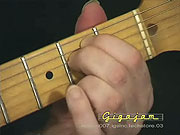
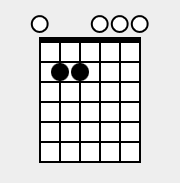
You may have noticed on the chord box that above the strings which are not fretted there are ‘Os’. This signifies that the strings are played and left ‘open’.
The first chord that we are going to learn is called E minor (Em). Look at the chord box and try and play the chord to hear its sound, getting used to the hand position of the chord.
The tone of the chord should be clear with all six strings being struck evenly. Aim to have all six strings at equal volume with no individual string sounding louder than the others. Ensure that the strumming hand is relaxed without tension in the wrist and arm. Take a look at this technique store video [Video 2].

|
Hold the plectrum in a relaxed manner, without consciously gripping. Holding the plectrum too tightly tenses the hand and arm and can lead to a heavy, uneven and brash strumming stroke.
|
|
The notes of the chord will play clearly if enough pressure is applied to them accurately. If any of the fingers, wrist or hand aches then the chord is being gripped too tightly!
If any of the strings sound ‘dead’ then it may be that a finger on another string is touching the dead string. Check to make certain that each finger is not touching one of the other strings.
Aim to have even strumming strokes at about 60 beats per minute (bpm) on the GuitarXtractor.
Play the chord of E minor, against the rhythm below, with even and relaxed down strums only. Use a clean sound on your guitar.



|
